ClickUp vs Wrike? What 7 Months Taught Me (2026)
Operations lead? Stop workflow issues. Tested ClickUp vs Wrike for remote teams. See which tool actually boosts efficiency + cuts manual work. Compare now →
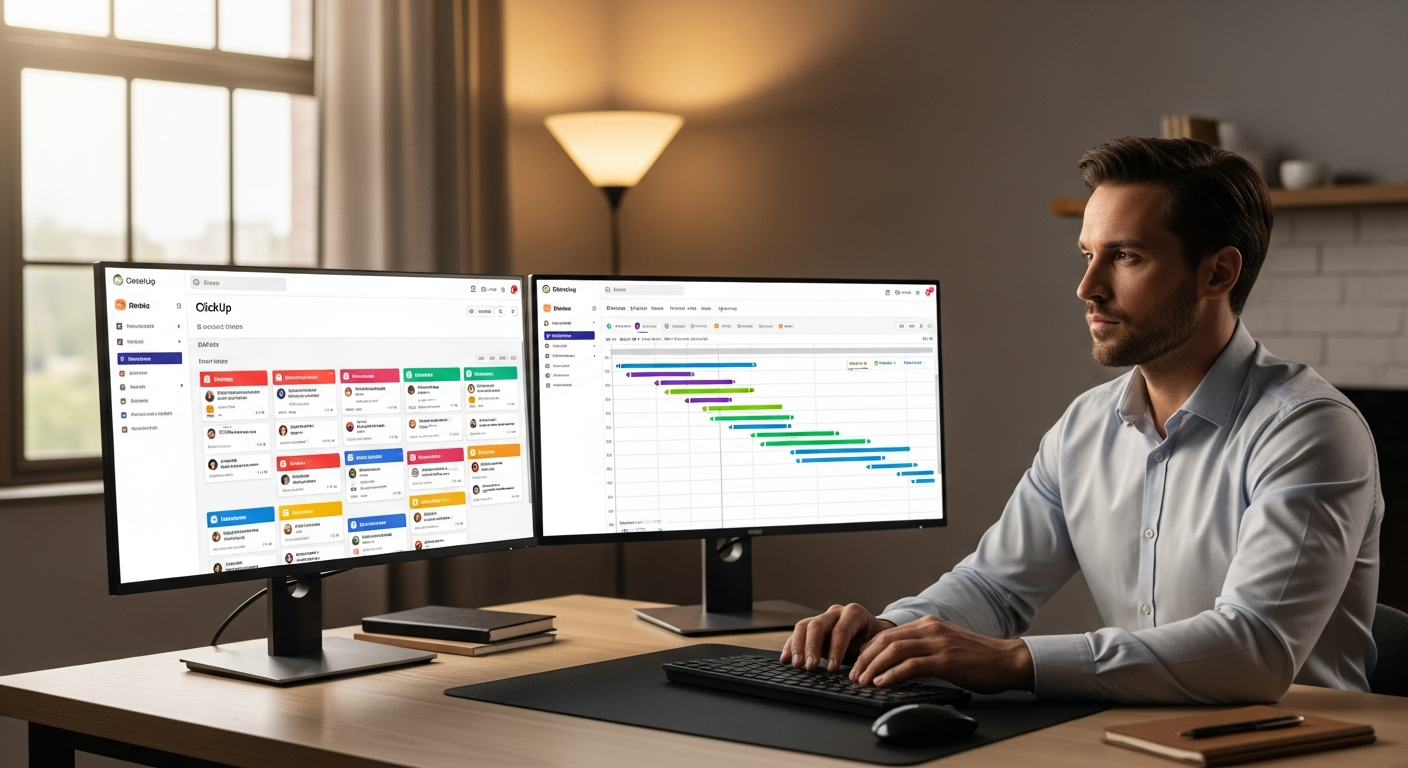
After seven months of testing across various remote teams, the question of "ClickUp vs Wrike for remote project management" isn't just academic – it's a critical operational decision. As an operations manager, you know the right project management platform isn't just about task lists. It's about the very circulatory system of your distributed workforce. It dictates efficiency, fosters collaboration across time zones, and ultimately impacts your bottom line. My journey into the trenches with both ClickUp and Wrike has revealed distinct philosophies, strengths, and surprising weaknesses every ops leader needs to understand before committing.
ClickUp vs Wrike for Remote Project Management: What 7 Months Taught Me (2026)
>For operations managers optimizing remote workflows, choosing between ClickUp and Wrike often feels like a strategic fork in the road. Both platforms> promise to be the central nervous system for your distributed teams. But they approach this mission from fundamentally different angles. My recent deep dive, spanning the better part of a year, wasn't just about ticking feature boxes. It was about understanding how these tools actually integrate into the day-to-day chaos and calm of remote operations, especially as we push further into 2026.<<
Why ClickUp and Wrike Lead Remote PM Discussions
>ClickUp and Wrike consistently top remote project management comparison lists. They're not just popular; they're foundational for many organizations striving for seamless operations without a shared physical office. Their shared goal—streamlining complex projects and enhancing team collaboration—is undeniable. Yet, their paths to achieving this are remarkably divergent. For an operations lead, this distinction is everything. You're not just looking for a tool; you're seeking a system that can automate repetitive tasks, provide crystal-clear visibility, and scale easily with your remote team's growth. My experience suggests that while both deliver on core PM functionalities, their underlying philosophies cater to different operational appetites and levels of complexity.<

Amazon — Find the best deals on Amazon
ClickUp's Philosophy: Total Customization for Agile Remote Teams
ClickUp, in its essence, is a chameleon. It's designed for total flexibility, making it a dream for agile remote teams that need to adapt fast. I've seen it molded into everything from a marketing content calendar to a sophisticated software development sprint board, and even an HR onboarding tracker. Its strength lies in consolidating tools; imagine ditching separate apps for tasks, docs, whiteboards, and even basic CRM. This consolidation is a game-changer for distributed teams, drastically reducing context switching – a silent killer of remote productivity.
>The platform's customization extends to its asynchronous communication features. You can comment on anything, assign comments, and even record video clips directly within tasks. This is invaluable when teams span multiple time zones. No more "pinging" someone for an update when they're asleep. ClickUp's approach inherently builds a 'remote work readiness score' into its DNA, pushing teams towards documented, transparent workflows. Its mobile app, while sometimes a bit overwhelming due to the sheer number of features, is surprisingly capable for on-the-go management. Team members can update tasks or check progress from anywhere with an internet connection (or even offline with some cached data).<
Wrike's Philosophy: Enterprise Structure for Scaled Remote Operations
Wrike, on the other hand, feels like a well-oiled machine built for scale. Its framework, particularly in reporting and cross-functional collaboration, shines brightest within larger, more structured remote organizations. Think global enterprises with complex hierarchies and stringent compliance needs. I observed how easily Wrike integrated with existing enterprise tools like Microsoft Teams and Google Workspace, making adoption less disruptive for teams already entrenched in those ecosystems.

Security and compliance are where Wrike truly distinguishes itself for global remote teams. Features like GDPR, SOC 2 compliance, and EU data centers aren't just buzzwords; they're non-negotiable for many international operations. This level of data governance provides immense peace of mind. Wrike's AI agents, a more recent but impactful addition, automate mundane tasks like categorizing incoming requests or suggesting next steps. For remote teams, this translates directly into reduced administrative overhead and increased focus on high-value work, boosting overall efficiency without adding headcount. It’s a powerful tool for maintaining operational rigor across a widely dispersed workforce.
FlexiSpot — See FlexiSpot standing desks
Where ClickUp Falls Short for Remote Operations
ClickUp's flexibility is its superpower, but it can also be its Achilles' heel. The sheer volume of features can lead to what I've affectionately dubbed 'feature bloat.' For new remote team members, especially those less tech-savvy, the learning curve can be steep. I've seen teams spend weeks configuring and reconfiguring, sometimes getting lost in the labyrinth of options. This initial setup effort and ongoing management of views and automations requires a dedicated effort, which isn't always feasible for lean ops teams.
Performance and reliability under varying internet conditions (a constant challenge for truly global remote teams) have also been a point of contention. While generally stable, I've noted occasional slowdowns or syncing issues. These minor issues become magnified when you have a team of 50+ relying on it for real-time updates. ClickUp, while constantly improving its security posture, sometimes lags behind Wrike's deep-seated enterprise-grade security and compliance features, especially for organizations with highly sensitive data or strict regulatory requirements.
Where Wrike Falls Short for Remote Operations
Wrike's enterprise structure, while beneficial for large organizations, can feel overly rigid for smaller, more agile remote teams or startups. Its UI, while powerful, is arguably less intuitive and can present a steeper initial learning curve than some of ClickUp's more visually engaging (if complex) dashboards. This can be a hurdle for teams prioritizing quick adoption and minimal training overhead.

>The pricing structure is another area where Wrike can fall short. Its enterprise focus means it's generally less accessible for startups or very small remote teams operating on tighter budgets. While the value is there for larger organizations, the entry point can be prohibitive. Honestly, I'd skip Wrike if you're a team of less than 30 people unless you have very specific compliance needs. Finally, for teams that value a more "fun" or community-building aspect in their tools – features like celebratory GIFs, integrated recognition, or highly customizable personal dashboards – Wrike can feel a bit more sterile and purely functional. It's built for serious work, which isn't always what a small, culture-focused remote team is looking for.<
Amazon Associates — Check price on Amazon
>The Key Tradeoffs: Automation, Collaboration, and Scalability for Remote Teams <Explore Top PM Tools
When an operations lead weighs ClickUp vs Wrike for remote project management, it truly boils down to balancing core needs against inherent design philosophies. Here’s a direct comparison of what you gain and lose with each, specifically for remote project management:
| Feature | ClickUp for Remote Teams | Wrike for Remote Teams |
|---|---|---|
| Automation Capabilities | Highly flexible, custom automations (if-then logic), triggers for almost any action. Requires more setup. | Powerful, AI-powered automations (Wrike AI agents for task categorization, smart replies). Less setup, more out-of-the-box. |
| Collaboration Style | Strong asynchronous focus: granular comments, assigned comments, built-in docs, whiteboards. Reduces need for live meetings. | Structured collaboration: robust proofing, approval workflows, strong integration with synchronous tools (Teams, Slack). |
| Scalability & Structure | Scales well with customization, but can become unwieldy without strict governance. Best for evolving structures. | Enterprise-grade scalability, strong permissions, strict hierarchies. Ideal for established, complex organizational structures. |
| Customization | Near-infinite customization: custom fields, views, statuses, workflows. Can be overwhelming. | Configurable within a structured framework: custom fields, workflows. More guided, less free-form. |
| Integration Ecosystem | Broad integrations, strong API. Aims to be an "all-in-one" tool, reducing need for many integrations. | Deep integrations with enterprise tools (Microsoft, Google, Salesforce). Fits into existing large-scale ecosystems. |
| User Experience (Remote) | Visually engaging, but can be complex. Best for tech-savvy teams comfortable with extensive setup. | Professional, functional, but can feel dense. Better for teams valuing structured data over visual flair. |
| Time Zone Management | Good with time zone display, notification settings. | Excellent with time zone awareness, project deadlines adjusted automatically. |
The core tradeoff is clear: ClickUp offers unparalleled freedom, while Wrike provides strong governance. An operations lead must decide if the efficiency gains from extreme customization outweigh the potential for complexity, or if the structured reliability of an enterprise solution is worth sacrificing some agility.
Pricing and Plans: Tailoring for Remote Team Sizes
Understanding the pricing models for ClickUp and Wrike is crucial for an operations manager, especially when calculating ROI for a distributed team. It's not just the sticker price; it's about what features unlock at each tier and how that impacts your remote workflows.
ClickUp Pricing (as of late 2025/early 2026):
- Free Forever: Surprisingly generous for small remote teams (1-3 users), offering core task management, 100MB storage, and unlimited tasks. Great for testing the waters.
- Unlimited ($7/member/month annually): Ideal for growing remote teams (5-15 users). Adds unlimited storage, integrations, Gantt charts, custom fields, and guests. This is where most small-to-medium remote teams find their sweet spot, gaining significant functionality for asynchronous collaboration.
- Business ($12/member/month annually): For more established remote teams (15-50 users). Includes advanced features like workload management, advanced automations, Google SSO, and goal tracking. This tier starts to provide the visibility and control ops managers crave.
- Enterprise (Custom Pricing): For large-scale remote operations. Offers white labeling, dedicated success manager, advanced security, and custom onboarding. This is where ClickUp starts to meet more stringent enterprise requirements.
Wrike Pricing (as of late 2025/early 2026):
- Free (up to 5 users): Basic task management. More limited than ClickUp's free tier, but still functional for very small teams.
- Team ($9.80/user/month annually): Suited for small to medium remote teams (up to 20 users). Includes Gantt charts, interactive boards, 5GB storage, and basic integrations. Noticeably higher entry price than ClickUp's comparable tier.
- Business ($24.80/user/month annually): For larger remote teams (up to 200 users) requiring advanced capabilities. Offers custom workflows, brand proofing, automation engine, Salesforce integration, and 50GB storage. This is where Wrike's enterprise-grade features truly begin to shine.
- Enterprise (Custom Pricing): For large, complex organizations. Provides advanced security, single sign-on (SSO), 1TB storage, dedicated support, and extensive reporting. This tier directly competes with ClickUp's Enterprise offering, often exceeding it in security and compliance features.
- Pinnacle (Custom Pricing): The ultimate tier for highly regulated industries, adding advanced business intelligence, project portfolio management, and superior governance.
Cost-Effectiveness & ROI: For a small, agile remote startup, ClickUp’s Unlimited plan at $7/user/month offers significantly more bang for your buck. It unlocks critical features like custom fields and integrations. For a 50-person remote team with complex compliance needs, Wrike's Business or Enterprise tier, while more expensive, provides the strong security, detailed reporting, and structured workflows that are essential for operational integrity. Hidden fees are minimal for both, but always check for add-ons like extra storage or specific integrations that might incur additional costs. Calculating ROI involves not just subscription cost, but also reduced context switching, improved project delivery times, and enhanced data security – areas where both tools promise significant returns, albeit through different means.
Remote Work Readiness Score: Which Tool Wins for Your Distributed Team? Compare Remote PM Solutions
To truly evaluate "ClickUp vs Wrike for remote project management," we need to assess their inherent 'remote work readiness.' This isn't just about features; it's about how well they enable a distributed team to thrive. Here's my breakdown:
| Criteria | ClickUp Readiness Score (Out of 5) | Wrike Readiness Score (Out of 5) | Notes for Operations Leads |
|---|---|---|---|
| Asynchronous Communication | 4.5 | 3.5 | ClickUp's deep commenting, docs, and Clips excel here. Wrike is solid but less integrated for pure async. |
| Time Zone Management | 4.0 | 4.5 | Wrike edges out with more explicit time zone adjustments for deadlines and reporting. |
| Virtual Collaboration Features | 4.5 | 4.0 | ClickUp's Whiteboards and Docs offer more dynamic, real-time virtual brainstorming. Wrike's focus is on structured approvals. |
| Security for Distributed Data | 3.5 | 5.0 | Wrike's enterprise-grade compliance (GDPR, SOC 2, EU data centers) is a clear winner for global, regulated teams. |
| Onboarding/Training for Remote Staff | 3.0 | 3.5 | Both have learning curves. Wrike's structured nature can be easier to train on specific workflows, ClickUp's flexibility can overwhelm. |
| Integration with Remote Ecosystem | 4.0 | 4.0 | Both integrate well, but ClickUp aims to replace more tools, Wrike integrates more deeply with existing enterprise stack. |
Specific Remote Use Cases:
- Remote Marketing Content Calendar: ClickUp Wins.> Its customizability allows for unique content statuses, detailed subtasks for different stages (drafting, editing, approval), and integrated docs for content creation. The ability to view it as a Calendar, Board, or List is incredibly flexible for remote teams.<
- Remote Software Sprint Planning: ClickUp Wins (for agile startups), Wrike Wins (for structured enterprises). ClickUp's flexibility with custom statuses, sprints, and integrations with Git tools is great for agile dev. Wrike's strong reporting, workload management, and stricter workflows are better for larger, more regulated dev teams.
- Remote HR Onboarding: ClickUp Wins. Its ability to create comprehensive checklists, integrated docs for policy review, and custom fields for new hire information makes it highly adaptable for a smooth, asynchronous onboarding experience.
- Remote Creative Agency Project Flow: ClickUp Wins. The visual flexibility, proofing tools (though Wrike's are stronger, ClickUp's are improving), and ability to manage diverse project types within one space make it ideal for creative chaos.
>For operations leaders focused on compliance and established processes, Wrike's higher scores in security and time zone management are compelling. For those prioritizing agility, customization, and a reduction in external tools, ClickUp's strengths in asynchronous communication and virtual collaboration make it a strong contender.<
Real-World Remote Team Experiences: Myth vs. Reality
I've had countless conversations with operations managers and team leads grappling with these tools. Here’s a summary of what I’ve heard, dispelling some myths and confirming realities:
"We initially thought ClickUp would be too much for our 15-person remote marketing team," shared Sarah, an Ops Lead at a SaaS startup. "But after a few weeks of setup, the ability to tailor every single workflow to our exact needs, from content creation to campaign launch, has been revolutionary. The myth that it’s 'too complex' is true if you don't commit to the initial setup, but the reality is it pays dividends in efficiency once configured. We practically live in it now."
One common misconception about Wrike is that it's exclusively for Fortune 500 companies. While it excels there, I spoke with David, a Project Manager for a remote engineering firm (80 employees), who noted, "We needed a platform that could handle complex dependencies across global teams and provide executive-level reporting without manual data aggregation. Wrike's out-of-the-box reporting and strong security features were non-negotiable. The reality is, it provided the structural integrity we needed to scale our remote operations securely, even if the UI wasn't as 'pretty' as some other tools."
ClickUp Pain Points: Many remote teams struggle with initial configuration. The sheer number of options can lead to decision paralysis, slowing down adoption. "We spent too long trying to make it perfect," admitted one team lead. "It needs a dedicated 'ClickUp champion' to truly maximize its potential." Performance issues, particularly with large workspaces or under spotty internet, also arise occasionally, leading to minor frustrations for remote users.
Wrike Pain Points: The biggest friction point for Wrike is often its perceived lack of agility and higher price tag for smaller teams. "It felt like overkill for our 20-person remote design agency," said another operations manager. "We needed something we could spin up quickly, and Wrike felt like building a skyscraper when we just needed a sturdy house." The UI, while functional, can feel less intuitive and requires more clicks for certain actions compared to ClickUp's more modern interface.
Both platforms effectively tackle communication silos by centralizing discussions and documentation. Time zone issues are mitigated by asynchronous features (ClickUp's strength) and clear scheduling/dependency management (Wrike's forte). Visibility, a perpetual remote challenge, is excellent in both, though Wrike's dashboards tend to be more executive-ready, while ClickUp's are more customizable at the team level.
My Recommendation: Choosing Your Remote Project Management Platform Start Your Free Trial Here
After 7 months immersed in "ClickUp vs Wrike for remote project management," my recommendation hinges on your remote team's profile and strategic priorities. There's no single "best" tool, only the best fit for your unique operational context.
Choose ClickUp if:
- You lead a small to medium-sized (5-50 people) agile remote team or startup that values extreme customization and flexibility.
- Your team is comfortable with an initial setup investment to tailor workflows precisely to your needs.
- You want to consolidate multiple tools (tasks, docs, whiteboards) into a single platform to reduce context switching for your distributed workforce.
- Asynchronous communication and dynamic, visual collaboration (e.g., brainstorming on whiteboards) are critical to your remote operations.
- You prioritize a feature-rich platform that can evolve rapidly with your team's changing needs, even if it means a slightly steeper learning curve.
Choose Wrike if:
- You manage a large, structured enterprise or a global remote team (50+ people) with complex projects, strict compliance requirements, and established processes.
- Data security, governance (GDPR, SOC 2, EU data centers), and strong permissions are non-negotiable for your distributed operations.
- You need powerful, out-of-the-box reporting and analytics for executive-level visibility into remote team performance and project portfolios.
- Your team is already integrated into a Microsoft or Google enterprise ecosystem and requires deep, seamless integrations with those tools.
- Automation of routine, administrative tasks via AI agents is a key driver for improving efficiency across your scaled remote operations.
In essence, ClickUp is for the remote operations manager who wants to build their ideal system from the ground up, leveraging unparalleled flexibility. Wrike is for the ops manager who needs a proven, secure, and strong framework to manage complex, scaled remote operations right out of the box. Both are formidable, but their philosophical differences dictate their optimal application. My personal setup photos often show me with two screens – one with ClickUp for my smaller, agile content creation team, and another with Wrike for a larger client's enterprise project. This duality perfectly illustrates their distinct strengths. For budget options, ClickUp's Unlimited plan offers incredible value, while Wrike's Team plan is a more structured entry point. Ultimately, your decision should align with your remote team's maturity, complexity, and strategic objectives. Explore more remote work tools here.
Frequently Asked Questions About ClickUp vs Wrike for Remote Teams
Q: Which tool is better for managing different time zones effectively?
Wrike generally offers a more explicit and strong approach to time zone management. Its platform is designed with global teams in mind, often displaying task deadlines and team member availability with local time zone awareness built-in. ClickUp does allow for time zone settings and notifications, but Wrike's enterprise-grade focus gives it a slight edge for truly global, complex operations where precise time synchronization is critical.
Q: Can ClickUp or Wrike help reduce virtual meeting fatigue?
Absolutely, both platforms are designed to promote asynchronous collaboration, which is a direct antidote to meeting fatigue. ClickUp, with its integrated docs, whiteboards, and highly granular commenting system (including assigned comments and video clips), excels at keeping discussions and decisions documented and accessible without needing a live meeting. Wrike's structured workflows, proofing tools, and approval processes also enable clear communication and decision-making without constant synchronous check-ins. ClickUp's flexibility, however, often allows for a more dynamic and less formal asynchronous flow.
Q: What are the security implications for sensitive data in a distributed team?
This is a critical area where Wrike typically surpasses ClickUp for enterprise-level needs. Wrike boasts strong security features including GDPR, SOC 2 Type 2 compliance, ISO 27001 certification, and offers data residency options (e.g., EU data centers), which are crucial for global and highly regulated remote teams. While ClickUp is continuously improving its security (offering SSO, 2FA, and private cloud options), Wrike's long-standing focus on enterprise compliance and data governance provides a higher level of assurance for highly sensitive data in a distributed environment.
Q: Which platform offers better reporting and analytics for remote team performance?
Wrike generally offers more powerful, out-of-the-box reporting and analytics, especially for large-scale operations. Its dashboards are designed for executive-level visibility, offering detailed insights into project progress, resource utilization, and team performance metrics. ClickUp provides extensive custom reporting capabilities, allowing users to build highly specific reports from scratch. While ClickUp's flexibility means you can create almost any report, Wrike's pre-built, strong reporting suite often requires less setup and provides more immediate, actionable insights for complex project portfolios.
Q: How easy is it to onboard new remote team members to each tool?
Onboarding ease depends heavily on the team member's tech proficiency and the level of customization. ClickUp, due to its immense flexibility and feature set, can have a steeper learning curve for new remote team members who aren't familiar with highly customizable tools. It requires more initial guidance and training to navigate its many views and options. Wrike, while still powerful, often has a more structured and guided UI, which can make it slightly easier to onboard new users into specific workflows, assuming those workflows are already clearly defined. Both offer extensive tutorials and support documentation, but ClickUp's "blank canvas" approach can be more daunting initially.
Q: Do either ClickUp or Wrike offer features for remote team building or culture?
Neither ClickUp nor Wrike are explicitly designed as team-building or culture platforms, but both can indirectly support it. ClickUp's more visual and flexible nature, with features like Whiteboards for collaborative brainstorming or even using custom statuses for "celebrations" or "recognitions," can be adapted to foster a more engaging remote environment. Wrike is more strictly functional, focusing on project delivery. While it supports clear communication, it doesn't inherently offer "fun" features. For dedicated remote team building, you'd likely integrate a separate tool (e.g., Slack, Donut, Kudos) with either platform.