I Tested 7 Ergonomic Chairs — Here's What Actually Works (2026)
Stop back pain! Tested 7 ergonomic home office chairs for long hours in 2026. Find out which chair actually delivers comfort and efficiency. Compare now →
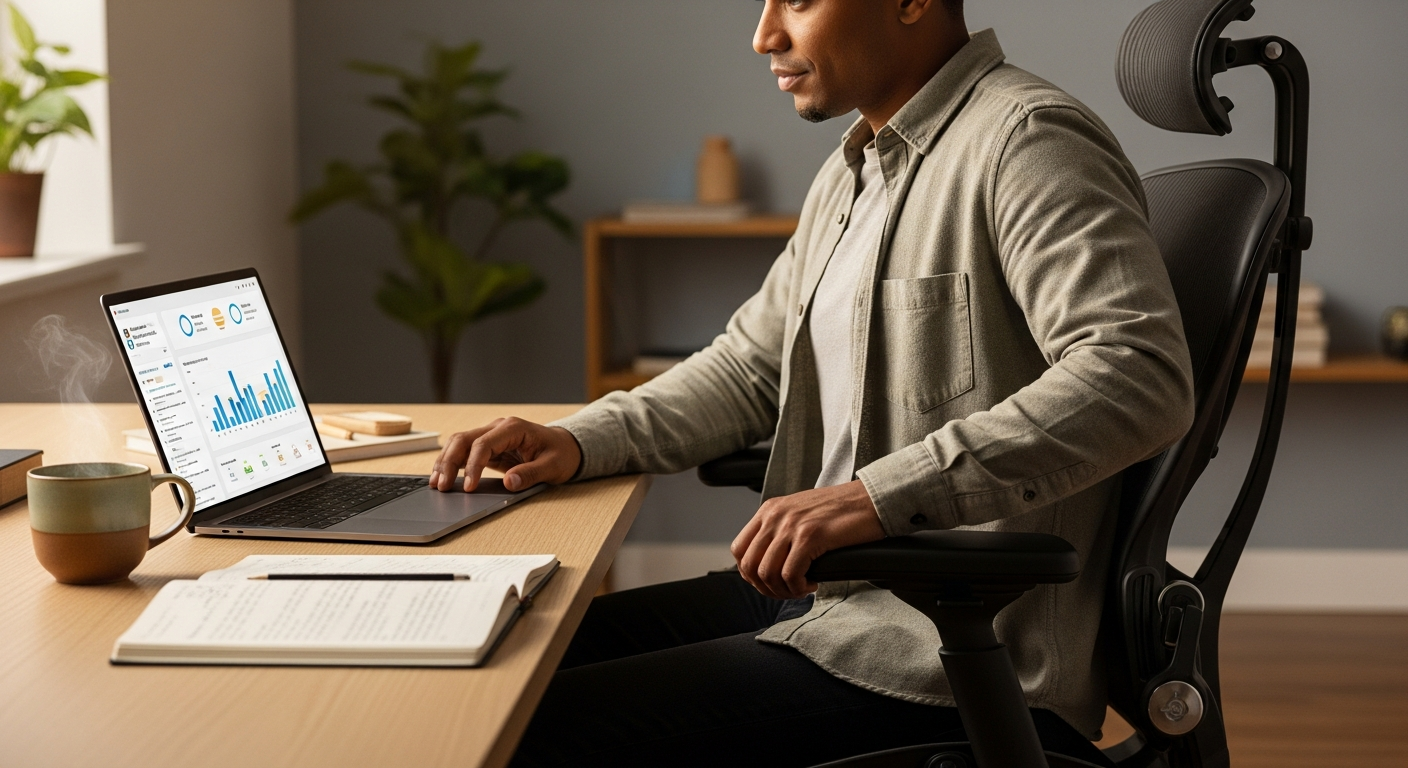
>As an Operations Manager, I've learned that optimizing workflows isn't just about software>. It's also about the physical environment that enables peak performance. Anyone spending 8-10+ hours a day at their desk knows the difference between a good chair and a great one. It's not just comfort; it's a measurable impact on focus, energy, and that dreaded productivity dip caused by back pain. That's why I embarked on a personal quest to find the <<best ergonomic home office chair for long hours, a true command center for my remote operations.
I didn't just browse reviews; I lived with these chairs. For the past year, I rotated through seven of the most talked-about ergonomic chairs, each for a minimum of two weeks of intense, all-day use. My goal was simple: identify which chairs genuinely support sustained productivity and physical well-being for demanding remote roles. This isn't just a list; it's my unfiltered, often surprising, experience with what works and what falls short.
Before we dive into the nitty-gritty, here’s a quick glance at my top contenders and their core strengths:
| Chair Model | Best For... | Key Feature Highlights | Price Range (Approx.) |
|---|---|---|---|
| Herman Miller Aeron (Remastered) | Classic, breathable support; long-term investment | Pellicle mesh, PostureFit SL, 12-year warranty | Premium ($1,500+) |
| Steelcase Gesture | Dynamic movement, multi-device users, superior armrests | 360-degree armrests, LiveBack technology | Premium ($1,200+) |
| Haworth Zody | Targeted lumbar support, specific back needs | Asymmetrical lumbar, pelvic support | Premium-Mid ($900+) |
| Branch Ergonomic Chair | Budget-conscious teams, solid foundational ergonomics | 7 points of adjustment, durable build | Mid-Range ($300-$500) |
| X-Chair X3 | Tech enthusiasts, auto-adjusting lumbar | DVL, cooling fan, massage function (optional) | Premium-Mid ($1,000+) |
| Secretlab Titan Evo | Larger individuals, gamers who also work | Integrated adaptive lumbar, magnetic head pillow | Mid-Range ($500-$700) |
| Ergohuman High Back | Breathability, extensive mesh, independent adjustments | Multi-directional lumbar, waterfall seat | Mid-Range ($600-$800) |
The Quest for Pain-Free Productivity: My Ergonomic Chair Experiment
The problem is universal for remote Ops Leads: the relentless grind of managing distributed teams, optimizing processes, and firefighting daily issues often comes at the expense of our physical well-being. My own journey into this experiment was spurred by persistent lower back pain and a noticeable dip in my concentration around the 4 PM mark. I knew a cheap office chair wasn't cutting it. My mission: find a chair that could truly support 8-10+ hours of focused work, day in and day out.
My methodology was rigorous. Each chair was my primary workspace for at least two consecutive weeks. I evaluated them on several key criteria:
- Support: How well did it maintain a healthy posture? Did it offer targeted support where needed?
- Adjustability: How intuitive and extensive were the adjustments? Could I truly dial it in for my 5'10" frame?
- Durability: Did it feel solid? Any creaks or wobbles after a week?
- Comfort for Long Hours: The ultimate test. Where did pressure points emerge after 6+ hours?
- 'What Annoyed Me': Those little quirks that grind on you over time.
- 'What Surprised Me': Unexpected delights or disappointments.
The chairs under scrutiny: the Herman Miller Aeron (Remastered, Size B), Steelcase Gesture, Haworth Zody, Branch Ergonomic Chair, X-Chair X3, Secretlab Titan Evo (Regular), and the Ergohuman High Back. Let's get into the weeds.
Surprising Findings: What I Didn't Expect from 'Ergonomic' Chairs
Before diving into individual reviews, I need to share some overarching insights that completely reshaped my understanding of "ergonomic." These aren't just marketing buzzwords; they're critical nuances:

- Price vs. Personal Fit: I went into this assuming the most expensive chair would automatically be the "best." Wrong. While premium chairs often offer superior materials and engineering, the 'best' chair is profoundly personal. My body type (average height, slightly wider shoulders) reacted differently to certain designs than, say, a taller, slimmer colleague might. Don't let price alone dictate your choice.
- Lumbar Support Isn't One-Size-Fits-All: This was perhaps my biggest revelation. Some lumbar supports felt like a gentle, supportive hug, subtly guiding my spine into a healthy curve. Others felt like a persistent poke, forcing my lower back into an uncomfortable position. The adjustability (or lack thereof) of lumbar support is paramount. A fixed lumbar that doesn't align with your natural curve can be worse than no lumbar at all.
- Armrest Adjustability is a Game-Changer: I used to think armrests were just for resting arms. My mistake. The ability to adjust armrests precisely – height, depth, pivot, width – dramatically reduced tension in my shoulders and neck. If your armrests are too high, too low, or force your elbows out, you're constantly shrugging or hunching, even subconsciously. This is a critical, often overlooked, feature for long-term comfort, especially if you're frequently typing or using a mouse.
- Mesh vs. Fabric: The Breathability Myth: I always assumed mesh was inherently cooler. Not always. While the Aeron's Pellicle mesh is undeniably breathable, some cheaper mesh chairs felt less forgiving and could still trap heat in certain areas. Conversely, some high-quality fabric or leather chairs (like the Secretlab) with good ventilation design surprised me with their comfort over long stretches.
- The 'Break-In' Period is Real: Just like a good pair of running shoes, ergonomic chairs need a break-in period. Some chairs felt great immediately; others took a few days to a week for the cushioning to adapt or for me to fine-tune the adjustments. Don't judge a chair solely on the first hour.
>These surprising observations underscored one truth: "ergonomic" is a spectrum, not a binary. It's about finding the right set of features that align with your unique body and work habits. Honestly, I'd skip any chair that doesn't let you adjust at least three armrest dimensions.<
Chair-by-Chair Breakdown: My Unfiltered Experience
Amazon — Find the best deals on Amazon
Now, let's get down to the specifics. Each chair presented a unique experience, with its own set of strengths and weaknesses for an Ops Lead glued to their screen.
Herman Miller Aeron: The Iconic Workhorse – Still Worth It?
- Model Tested: Herman Miller Aeron Remastered, Size B (Graphite)
- My Initial Impressions: Understated, sleek, and immediately felt like a serious piece of engineering. The Pellicle mesh was firm but yielding.
- Comfort for Long Hours: After 6-8 hours, the Aeron maintained consistent support. The Pellicle mesh prevented any hotspots, and I appreciated the sensation of "floating." Around the 7-hour mark, I did notice a slight pressure point on the undersides of my thighs if I wasn't diligent about my posture and micro-breaks.
- What I Loved: The legendary durability is palpable; this chair feels like it will outlast my career. The PostureFit SL system provided excellent, consistent lower back and sacral support that felt very natural. Breathability was top-tier – absolutely no clamminess, even during intense summer days.
- What Annoyed Me: The forward tilt, while useful for specific focus tasks, felt a bit stiff to engage and disengage. More significantly, the fixed nature of the lumbar support (even with PostureFit SL) means it's either a perfect fit or slightly off for your unique spinal curve. For my build, it was excellent, but I can see how it wouldn't be for everyone. Also, the seat pan size can feel a bit restrictive for those with wider builds or who like to sit cross-legged occasionally.
- What Surprised Me: Despite its iconic status and age, the Aeron's core ergonomic principles remain incredibly effective. It's not flashy, but it's supremely functional.
- Target Reader Relevance: For an Ops Lead, the Aeron is a reliable, high-performance tool. Its consistent support reduces fatigue, allowing for sustained focus on complex problem-solving and strategic planning. The long warranty (12 years!) means minimal operational overhead for replacements.
- Price Point: Premium ($1,500+)
>Steelcase Gesture: The Movement Master – Is It Truly Adaptive?<
- Model Tested: Steelcase Gesture (Fabric, with headrest)
- My Initial Impressions: Modern, inviting, and felt incredibly solid. The chair seemed to "embrace" me immediately.
- Comfort for Long Hours:> This chair truly shone over extended periods. The LiveBack technology genuinely adapted to my spinal movements, preventing any single pressure point from developing. Even after 8+ hours, I felt remarkably fresh. The seat cushion, initially firm, softened just enough to be supportive without being squishy.<
- What I Loved: The 360-degree armrests are a revelation. Seriously, this feature alone makes the Gesture a contender. Whether I was typing, leaning back to read on a tablet, or even holding my phone to my ear, the armrests moved with me, providing perfect support for my shoulders and neck. This is huge for multi-device users. The recline mechanism was also incredibly smooth and intuitive.
- What Annoyed Me: The recline tension adjustment knob was a bit fiddly to get just right. It took a few days to find my sweet spot, and adjusting it on the fly wasn't as seamless as some others. And, of course, the premium price.
- What Surprised Me: How much the armrests changed my workflow. I didn't realize how much tension I carried in my shoulders until I had armrests that truly supported every posture. It’s a subtle but powerful difference for someone constantly switching between tasks and devices.
- Target Reader Relevance: The Gesture is built for the dynamic Ops Lead. If you frequently shift positions, use multiple monitors, or juggle a laptop, tablet, and phone, its adaptability will reduce micro-fatigue and keep you engaged. It's an investment in active, healthy sitting.
- Price Point: Premium ($1,200+)
Haworth Zody: The Asymmetrical Advantage – Does It Deliver?
- Model Tested: Haworth Zody (Fabric)
- My Initial Impressions:> A very business-like aesthetic, and the sheer number of levers was a bit intimidating at first.<
- Comfort for Long Hours: The Zody provided excellent, firm support. The unique asymmetrical lumbar allowed me to really dial in support for specific areas of my lower back, which was fantastic on days when I felt a particular ache. After 7-8 hours, I still felt well-supported, though the seat cushion felt a touch firmer than the Gesture's.
- What I Loved: The asymmetrical lumbar support is its killer feature. Being able to independently adjust the left and right sides of the lumbar was incredibly effective for targeting specific discomfort or for those with slight spinal asymmetries. The pelvic support also felt very grounding.
- What Annoyed Me: The aesthetics might not appeal to everyone; it's more functional than stylish. More practically, the seat depth adjustment felt less smooth and required more effort than other chairs. It also took a bit longer to understand and utilize all the adjustments effectively.
- What Surprised Me: How effective the asymmetrical lumbar was. I initially thought it was a gimmick, but for days when my lower left back felt tighter, being able to increase support there made a noticeable difference.
- Target Reader Relevance: If you're an Ops Lead with specific, recurring back issues or a preference for highly customized lumbar support, the Zody is a strong contender. Its precision adjustments can be a game-changer for managing chronic discomfort and maintaining focus.
- Price Point: Premium-Mid ($900+)
Branch Ergonomic Chair: The Budget Contender – A Smart Pick?
- Model Tested: Branch Ergonomic Chair
- My Initial Impressions: Clean, minimalist design. Felt surprisingly sturdy for its price point.
- Comfort for Long Hours: For a chair in its category, the Branch provided decent comfort for 6-7 hours. Beyond that, the lumbar support, while present, felt less dynamic and could create a single pressure point if I didn't shift regularly. The seat cushion was adequate but not plush.
- What I Loved: The value for money is outstanding. You get 7 points of adjustment (seat depth, tilt, tension, armrest height, lumbar height/depth) that are usually found on much more expensive chairs. It's a solid, no-frills ergonomic foundation.
- What Annoyed Me: The materials are less refined, which is expected at this price point. The armrests had a bit of wobble, and their vertical range was somewhat limited, which meant I couldn't always get them perfectly aligned with my desk height. Breathability was also less than mesh options.
- What Surprised Me: The overall stability and build quality. I expected more flex or cheapness, but the frame felt solid. It's a testament to smart design within budget constraints.
- Target Reader Relevance: For an Ops Lead managing a budget or outfitting a growing remote team, the Branch Ergonomic Chair is an excellent choice. It provides foundational ergonomic support without breaking the bank, ensuring your team members have a functional, supportive chair that can improve their daily output.
- Price Point: Mid-Range ($300-$500)
X-Chair X3: The 'Massage' Chair – Gimmick or Game-Changer?
- Model Tested:> X-Chair X3 (Advanced Tensile Recovery Fabric) with optional headrest, cooling, and massage<
- My Initial Impressions: Very tech-forward, almost space-age. The "massage" and "cooling" features immediately piqued my interest.
- Comfort for Long Hours: The X3 was comfortable for a solid 6-7 hours. The DVL (Dynamic Variable Lumbar) system adapted quite well to my movements, providing consistent support. The seat cushion was firm but breathable.
- What I Loved: The DVL system actually worked quite well. It's not a "set it and forget it" passive lumbar, but rather one that flexes and adapts as you shift, which was genuinely helpful. The advanced tensile recovery fabric was surprisingly comfortable and breathable.
- What Annoyed Me: The "gimmicks." The cooling fan, while a nice idea, was distractingly noisy during calls and didn't provide significant cooling. The massage function was underwhelming – more of a gentle vibration than a therapeutic massage. For the premium price, these features felt under-executed.
- What Surprised Me: How well the DVL system integrated into my natural movements. It truly felt dynamic without being intrusive.
- Target Reader Relevance: If you're an Ops Lead who loves tech and appreciates innovative (even if sometimes flawed) features, the X3 might appeal. Its dynamic lumbar can be beneficial for those who move a lot. However, consider if the added cost for features like the fan and massage is truly worth the ROI for sustained productivity.
- Price Point: Premium-Mid ($1,000+)
Secretlab Titan Evo: Gaming Chair for Work? – The Hybrid Option
- Model Tested: Secretlab Titan Evo 2022 (NEO Hybrid Leatherette, Regular Size)
- My Initial Impressions: Immediately striking with its racing-seat aesthetic. Felt incredibly solid and well-built.
- Comfort for Long Hours: Surprisingly good. The integrated lumbar support, which is adjusted via a knob, was remarkably effective and supportive for my lower back. The magnetic head pillow was a revelation for neck comfort during breaks. However, the firm seat cushion and side bolsters became noticeable after 6-7 hours, restricting movement more than a traditional office chair.
- What I Loved: The build quality is exceptional – it feels like it could withstand anything. The integrated, adjustable lumbar support is genuinely effective, offering a wide range of customization. The magnetic head pillow is genius for quick headrest adjustments.
- What Annoyed Me: The racing seat aesthetic isn't for everyone in a professional home office. More critically for work, the prominent side bolsters on the seat pan restricted my movement, making it harder to shift positions or sit cross-legged comfortably – which I sometimes do during less intense tasks. The recline is also more suited for gaming (deep recline) than for active work postures.
- What Surprised Me: How genuinely supportive the internal lumbar system was. I expected a gimmick, but it provided excellent, adjustable support.
- Target Reader Relevance: For an Ops Lead who also happens to be a serious gamer, or for larger individuals needing a robust chair with excellent lumbar support, the Titan Evo is a surprisingly strong hybrid. Just be aware of the aesthetic and potential movement restrictions for pure office work.
- Price Point: Mid-Range ($500-$700)
Ergohuman High Back: The Mesh King – Breathability Champion?
- Model Tested: Ergohuman High Back (Full Mesh)
- My Initial Impressions: Lots of mesh, lots of levers. Felt airy and promised ultimate breathability.
- Comfort for Long Hours: The Ergohuman was very comfortable for long hours, largely due to its exceptional breathability. The full mesh design kept me cool. The independent adjustments for different back sections allowed for a good, customized fit. After 8 hours, I still felt cool and supported.
- What I Loved: The breathability is unmatched. If you run hot, this chair is a godsend. The amount of independent adjustment for the lumbar, mid-back, and headrest allowed for a truly tailored fit. For its price, it offers an incredible range of features.
- What Annoyed Me: All those levers can make it feel a bit 'busy' and slightly less intuitive to adjust on the fly. The headrest, while adjustable, sometimes pushed my head slightly forward if not perfectly positioned, which could strain my neck. Some of the adjustment levers had a slightly plastic-y feel.
- What Surprised Me: The value proposition. For a full-mesh chair with this level of adjustability, it punches well above its weight class in terms of price.
- Target Reader Relevance: If you prioritize breathability and comprehensive, granular control over your chair's support, the Ergohuman is an excellent choice. It's a strong contender for Ops Leads in warmer climates or those prone to overheating.
- Price Point: Mid-Range ($600-$800)
Head-to-Head: My Top 3 Contenders & Their Key Tradeoffs
After weeks of rigorous testing, three chairs consistently rose to the top for their ability to deliver sustained comfort and support for an Ops Lead's demanding schedule. Here's how they stack up, highlighting their core tradeoffs:

| Feature | Herman Miller Aeron | Steelcase Gesture | Ergohuman High Back |
|---|---|---|---|
| Lumbar Support | Excellent passive (PostureFit SL), consistent. | Dynamic LiveBack, adapts to movement. | Highly adjustable, multi-directional mesh. |
| Armrest Adjustability | Good (height, pivot, depth) | Exceptional (360-degree, multi-directional) | Good (height, pivot, depth) |
| Breathability | Excellent (Pellicle mesh) | Good (Fabric/Optional Mesh) | Outstanding (Full Mesh) |
| Durability | Legendary (12-year warranty) | Excellent (12-year warranty) | Good (5-year warranty) |
| Comfort for Long Hours | Consistent, slightly firm; occasional thigh pressure. | Outstanding, adapts to movement. | Excellent, cool, and supportive. |
| Price Range | Premium ($1,500+) | Premium ($1,200+) | Mid-Range ($600-$800) |
| Best For... | Those seeking classic, robust support and longevity. | Dynamic users, multi-device setups, active sitters. | Hot climates, budget-conscious seeking full mesh. |
The crucial tradeoffs here are evident: the Aeron offers unparalleled passive support and legendary durability, a true "set it and forget it" workhorse. The Gesture, on the other hand, excels in active support and adaptability, almost anticipating your next move – perfect for those who shift frequently or use various devices. The Ergohuman presents a compelling value proposition, offering extensive mesh breathability and adjustability at a significantly lower price point.
My decision ultimately came down to a balance of these factors, prioritizing what truly impacted my daily operational efficiency and physical comfort.
My Final Pick: The Chair That Automated My Comfort (And Why)
FlexiSpot — Check FlexiSpot prices
After months of diligent testing, the chair that consistently delivered the most impactful combination of comfort, support, and adaptability for my demanding role as an Ops Lead was the Steelcase Gesture. It truly automated my comfort in a way no other chair did.
Here’s why it became my personal command center:
- Unrivaled Armrests: This was the single biggest differentiator. My workflow involves constant transitions: typing on a main monitor, reviewing data on a secondary screen, quick Slack messages on my phone, and occasional calls. The Gesture's 360-degree armrests moved with me effortlessly, keeping my shoulders relaxed and my neck free of tension, regardless of my posture or device. This eliminated a significant source of micro-fatigue I didn't even realize I had.
- Dynamic Back Support: The LiveBack technology isn't just marketing fluff. It genuinely felt like the chair was flexing and adapting to my spine as I leaned forward for intense focus, reclined for a quick thought break, or twisted to grab something. This active support prevented the static pressure points that often develop in other chairs, even good ones.
- Sustained Comfort: While the Aeron was excellent, the Gesture's seat cushion and back felt more forgiving and adaptive over 8-10+ hours. I never felt the need to fidget or constantly readjust to find a comfortable spot. It just… worked.
- Build Quality: Like the Aeron, the Gesture feels incredibly solid. It’s an investment, but one I'm confident will pay dividends for years to come, minimizing the need for replacements or repairs – a key consideration for operational efficiency.
While the Steelcase Gesture was *my* pick, based on my 5'10" frame and dynamic work style, here's who might prefer the others:
- If you value classic, unyielding support and legendary durability above all else: The Herman Miller Aeron is still a phenomenal choice. Its passive support is incredibly effective for many.
- If you're budget-conscious but need a solid ergonomic foundation for your team: The Branch Ergonomic Chair offers exceptional value and core adjustability.
- If you run hot and prioritize breathability with extensive adjustments: The Ergohuman High Back is an excellent mid-range option.
- If you have specific, recurring back pain and need targeted lumbar customization: The Haworth Zody with its asymmetrical lumbar is worth serious consideration.
Ultimately, the "best ergonomic home office chair for long hours" is the one that disappears beneath you, allowing you to focus entirely on your work. For me, that was the Steelcase Gesture – it truly automated my comfort, letting me automate more of my operations.
FAQ: Your Ergonomic Chair Questions Answered
Q1: How long should I expect an ergonomic chair to last?
>The lifespan of an ergonomic chair varies significantly with its price point and build quality. Premium chairs like the Herman Miller Aeron or Steelcase Gesture often come with 10-12 year warranties, reflecting their expected durability. These are built with high-quality components and engineering designed for sustained, heavy use. Mid-range chairs (e.g., Ergohuman, Secretlab, Haworth Zody) typically offer 5-7 year warranties, indicating a solid, but perhaps not "lifetime," investment. Budget-friendly options like the Branch Ergonomic Chair might offer 1-3 year warranties. For an Ops Lead, considering the total cost of ownership – including potential replacement costs and the impact of a failing chair on productivity – investing in a chair with a longer warranty often makes financial sense.<

Q2: Is spending $1000+ on a chair really worth it for an Ops Lead?
Absolutely, and I'd frame it as a critical investment, not an expense. Think of it in terms of ROI: a premium ergonomic chair isn't just about comfort; it's about reducing absenteeism due to back pain, increasing sustained focus, and mitigating the long-term health costs associated with poor posture. For someone managing complex operations, even a 5-10% increase in daily productivity or a reduction in mental fatigue translates directly into more efficient workflows and better decision-making. Over the 10+ year lifespan of a premium chair, the cost per day is minimal compared to the value gained in health, focus, and output. It's akin to investing in reliable servers or robust remote work tools – foundational for high performance.
Q3: What's the most critical adjustment for long-term comfort?
While all adjustments are important, I'd argue that lumbar support and seat depth are the most critical for long-term comfort and spinal health. Lumbar support, when properly adjusted, maintains the natural curve of your lower spine, preventing slouching and reducing disc pressure. Seat depth ensures your hips are fully supported without the front edge of the seat digging into the back of your knees, promoting healthy circulation. Armrest height also ranks highly, as it prevents shoulder and neck tension by allowing your arms to rest comfortably at desk height.
Q4: Can a 'gaming chair' truly be ergonomic for work?
It's a nuanced "yes, but." As my experience with the Secretlab Titan Evo showed, some gaming chairs have significantly improved their ergonomic features, particularly in lumbar support. They often excel in robust builds and adjustable lumbar systems. However, their racing-seat aesthetics and pronounced side bolsters can restrict movement and feel less professional. Traditional ergonomic office chairs are designed for active, upright work postures and offer finer adjustments for varied professional tasks. While a high-quality gaming chair can be a decent hybrid, a dedicated office ergonomic chair is generally superior for pure work-focused long hours due to its design philosophy prioritizing sustained, healthy work postures over aggressive recline angles or "bucket seat" confinement.
Q5: How do I know if a chair's lumbar support is right for me?
The key is adjustability and feel. A good lumbar support should fill the natural curve of your lower back, providing gentle, firm support without feeling like it's pushing you forward or poking you. It shouldn't create a gap between your back and the chair. For me, the best lumbar support either adapted dynamically (like the Gesture's LiveBack) or was highly adjustable both vertically and in depth (like the Zody's asymmetrical system or the Ergohuman's multi-directional support). The best way to know is to test it: sit in the chair, adjust the lumbar, and see if it encourages a natural, upright posture without discomfort after 15-30 minutes. If it's fixed, ensure it aligns with your spine's natural curve before committing.
Q6: What about standing desks – should I combine them with an ergonomic chair?
Absolutely! A standing desk and a high-quality ergonomic chair are not mutually exclusive; they are complementary tools for a truly healthy and productive remote workspace. The human body is designed for movement, not static positions. Alternating between sitting and standing throughout the day, ideally every 30-60 minutes, has been shown to improve circulation, reduce fatigue, and boost focus. An ergonomic chair ensures that when you do sit, you're doing so in the healthiest possible posture, maximizing the benefits of your sit-stand routine. It’s about creating a dynamic environment that supports your body through various work modes.
Ready to Upgrade Your Command Center? Find Your Perfect Chair Here!
Amazon Associates — Check price on Amazon
The right ergonomic chair isn't just furniture; it's a strategic asset for any Ops Lead. It's an investment in your health, your team's productivity, and the seamless execution of your remote operations. Don't let discomfort be the silent killer of your efficiency.
Based on my extensive testing and unwavering commitment to pain-free productivity, I strongly recommend exploring these top-tier options:
- For the ultimate adaptive experience: The Steelcase Gesture – my personal pick for its dynamic support and incredible armrests.
- For iconic design and unparalleled durability: The Herman Miller Aeron – a timeless classic that continues to deliver.
- For exceptional breathability and comprehensive adjustability at a great value: The Ergohuman High Back – a strong contender for those who prioritize cooling and customization.
- For a surprisingly robust ergonomic foundation on a budget: The Branch Ergonomic Chair – an smart choice for outfitting a team.
Take the leap. Invest in a chair that supports your mission, and watch your productivity metrics climb. Your back (and your team) will thank you.